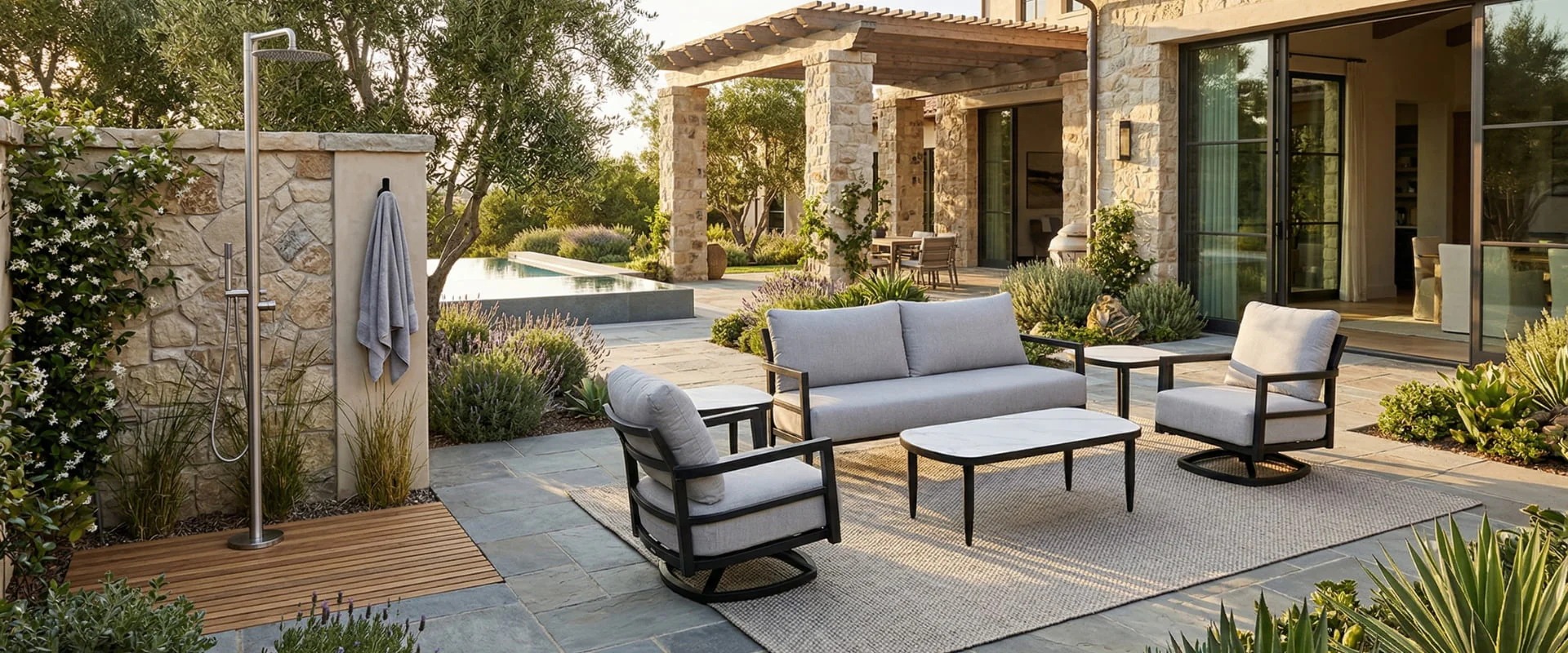
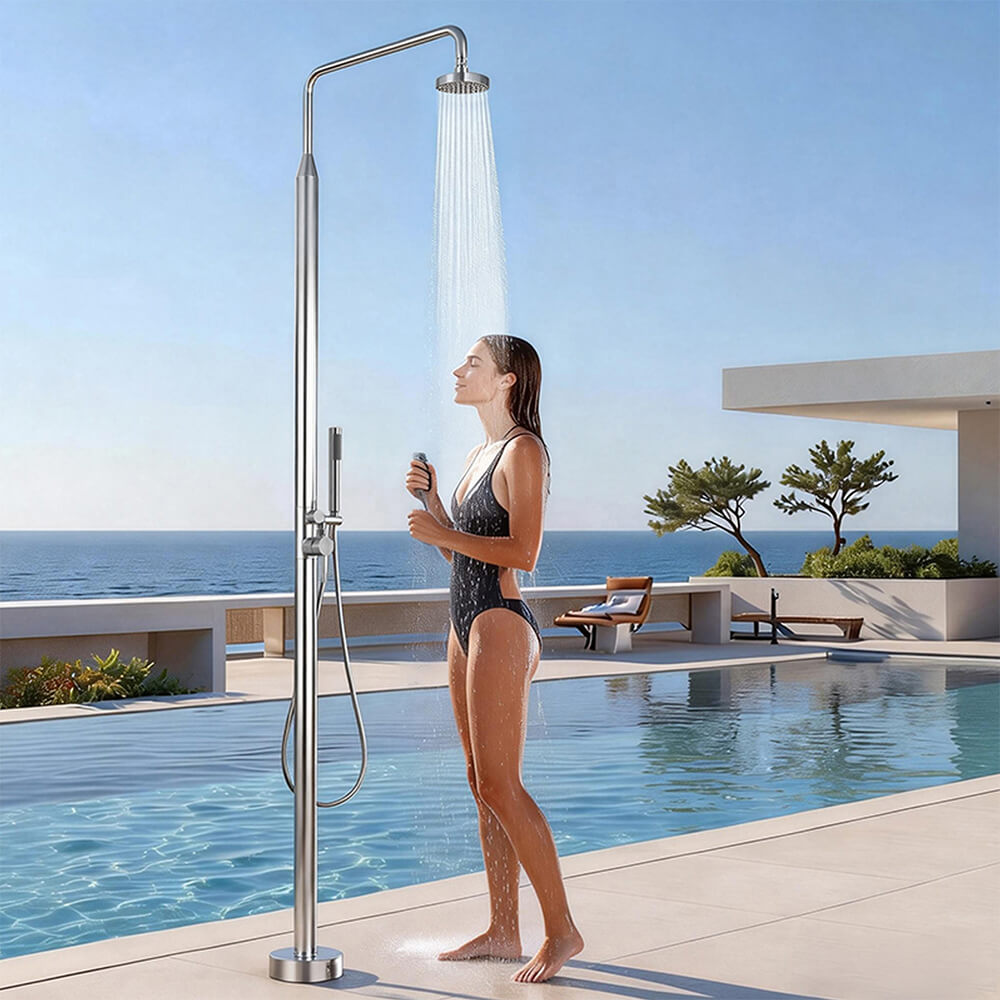
Step out of the pool and into a full-body rinse — without tracking a single drop through your house. That is the promise of a freestanding outdoor shower, and it is one of the simplest backyard upgrades that pays off every single day you spend outdoors.
Unlike wall-mounted units, a freestanding column stands on its own, which means you can place it exactly where you want it: by the pool, at the garden edge, or near the back door. No exterior wall required. No breaking into plumbing for basic setups.
This guide covers what a freestanding outdoor shower delivers, how to choose the right model, what materials survive the outdoors, installation essentials, and design trends worth knowing in 2026.
1. What a Freestanding Outdoor Shower Actually Delivers
Beyond the obvious convenience, a quality freestanding unit adds real value to daily life:
- Keeps your home cleaner — sand, chlorine, and mud never make it past the patio
- Removes pool chemicals fast — rinse chlorine off before it dries on skin and damages hair
- Supports wellness — cold-water rinses boost circulation and ease muscle tension after swims or workouts
- Adds privacy — a dedicated outdoor changing and rinse space keeps your indoor bathroom dry
- No wall required — position the shower anywhere with a stable base and water access
2. Freestanding vs. Wall-Mounted: Which Is Right for You?
| Factor |
Freestanding Column |
Wall-Mounted |
| Placement flexibility |
Anywhere with a flat base |
Must sit against an exterior wall |
| Installation effort |
Moderate — base + hose or lines |
Easier if wall plumbing exists |
| Visual impact |
Standalone landscape feature |
Discreet, space-saving |
| Wind stability |
Requires anchoring |
Naturally stable |
| Typical price |
$250 – $1,200 |
$100 – $500 |
| Best for |
Pools, open yards, lake houses |
Small patios, existing walls |
3. What a Quality Freestanding Shower Includes
Look for these features when comparing models:
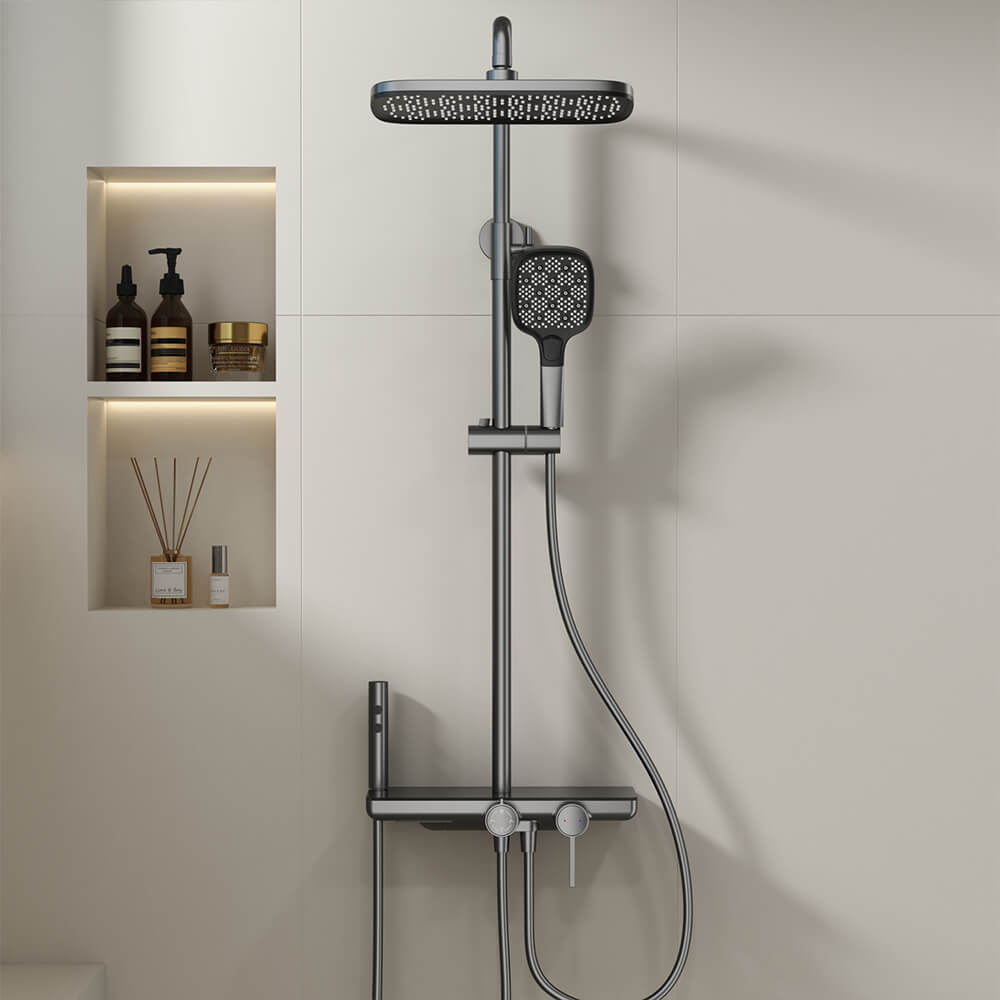
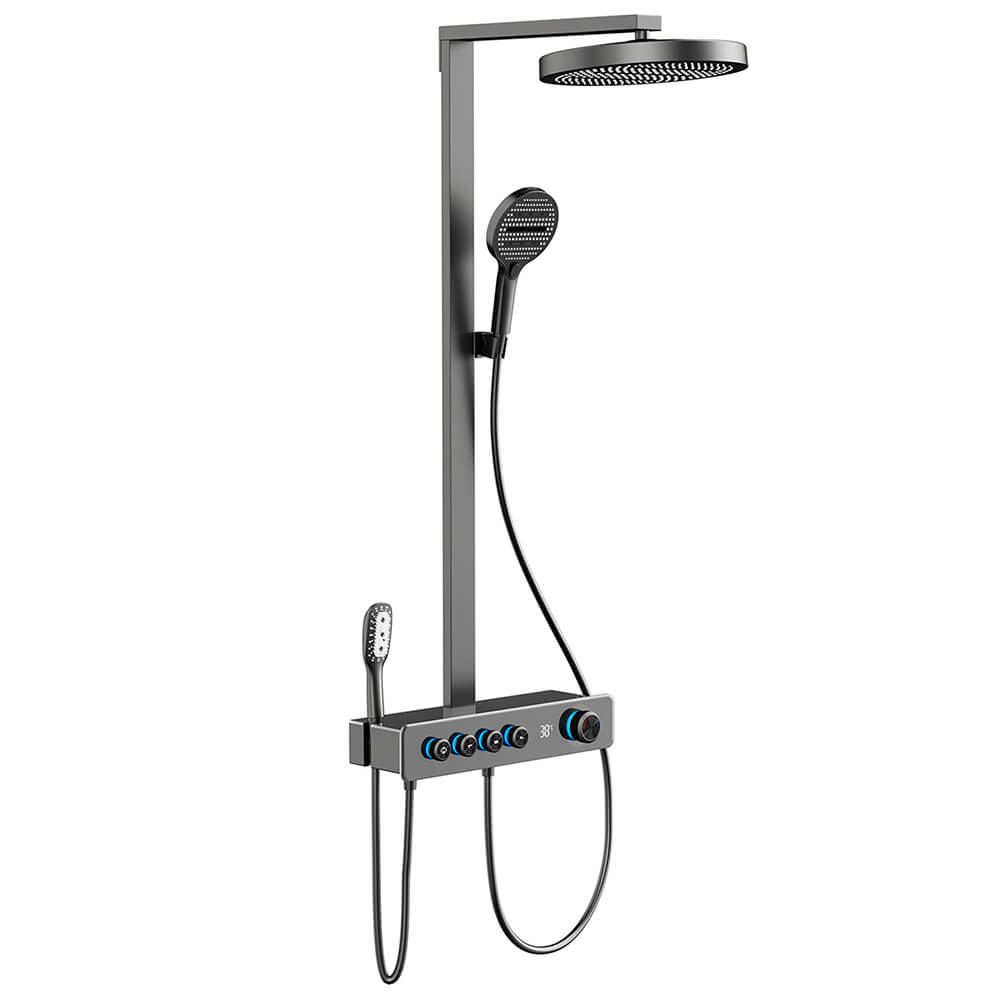
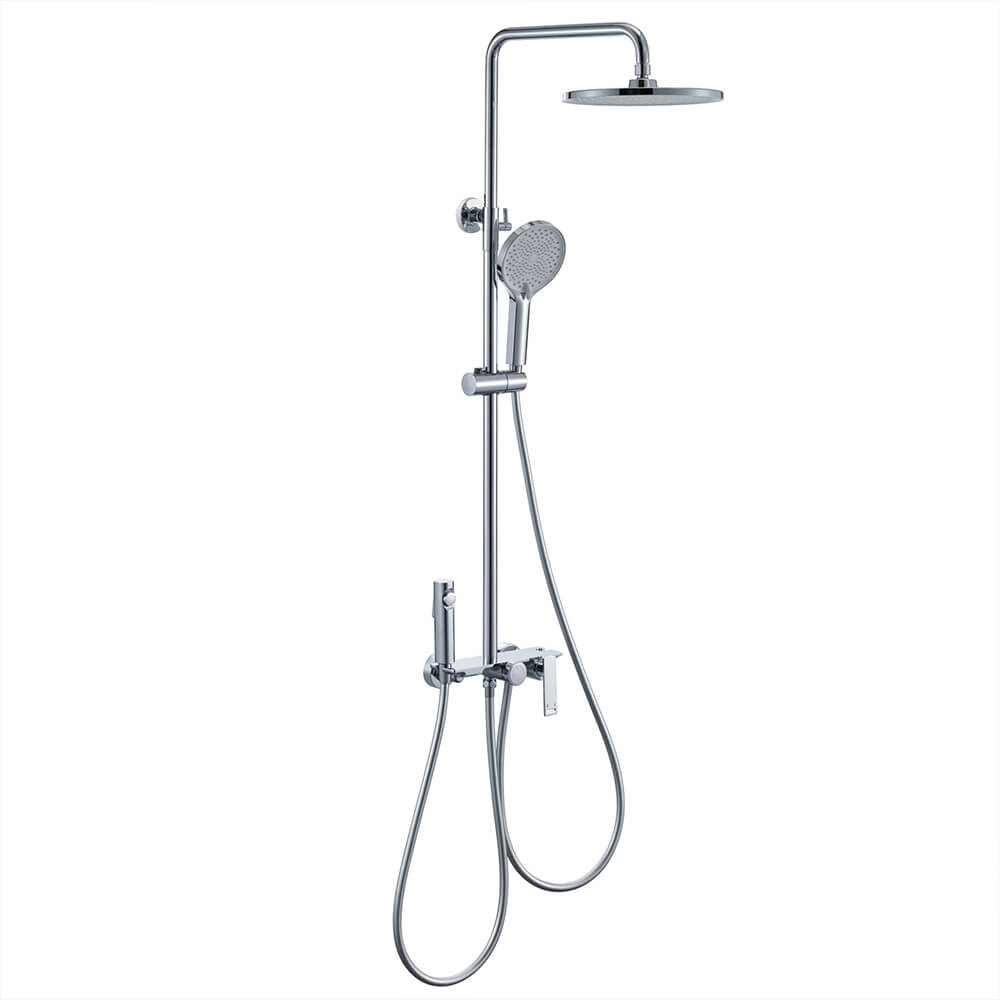
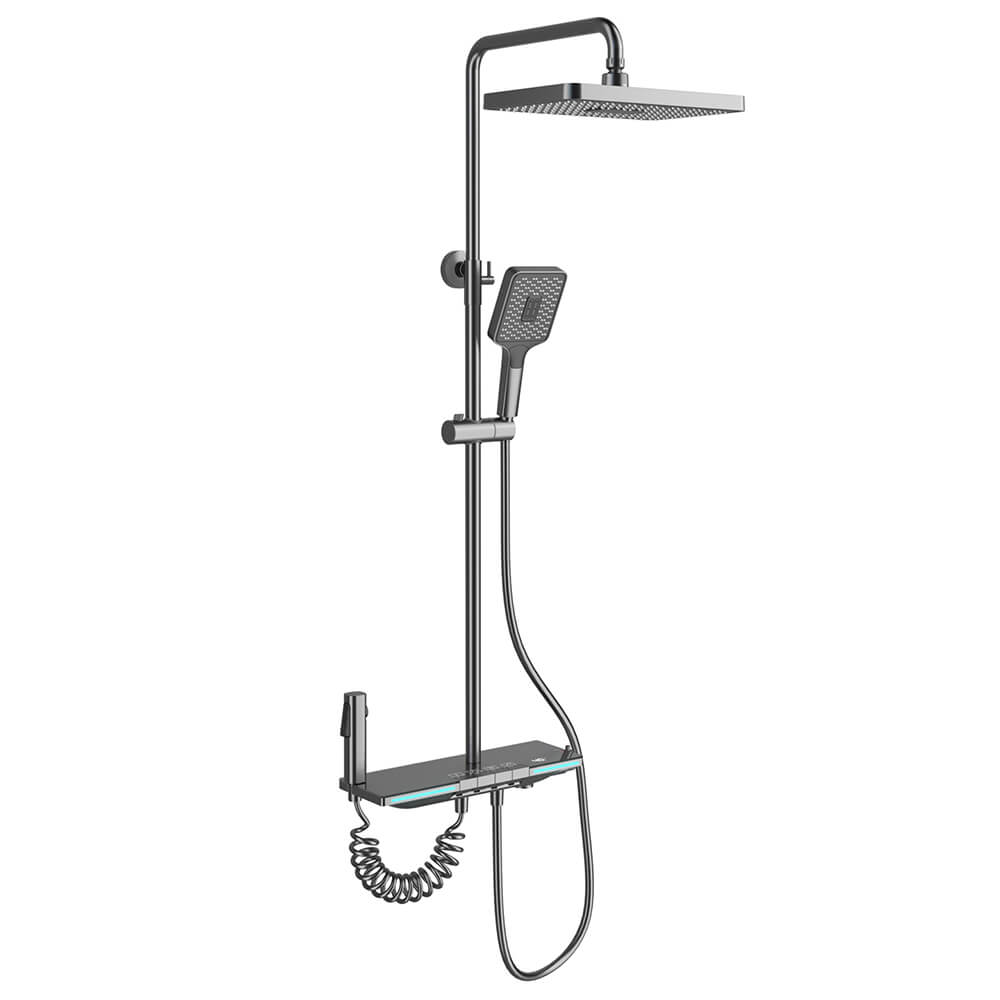
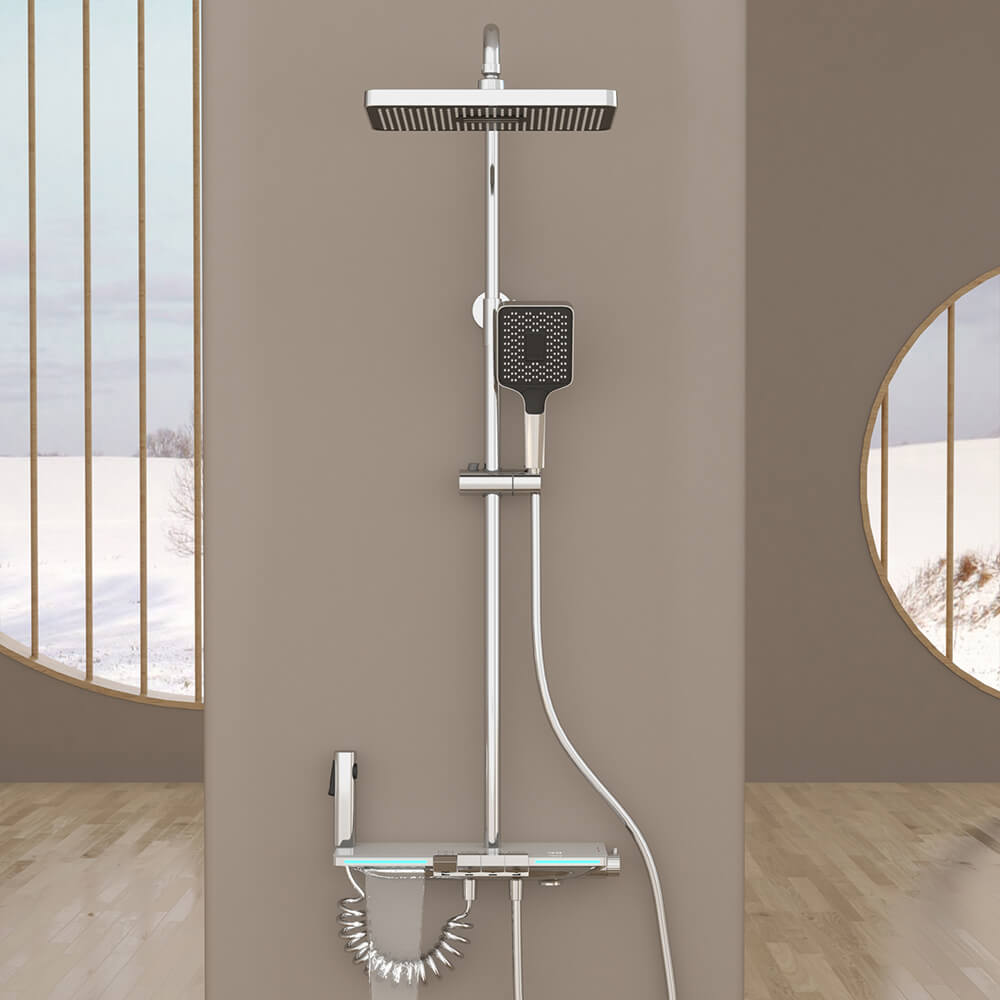
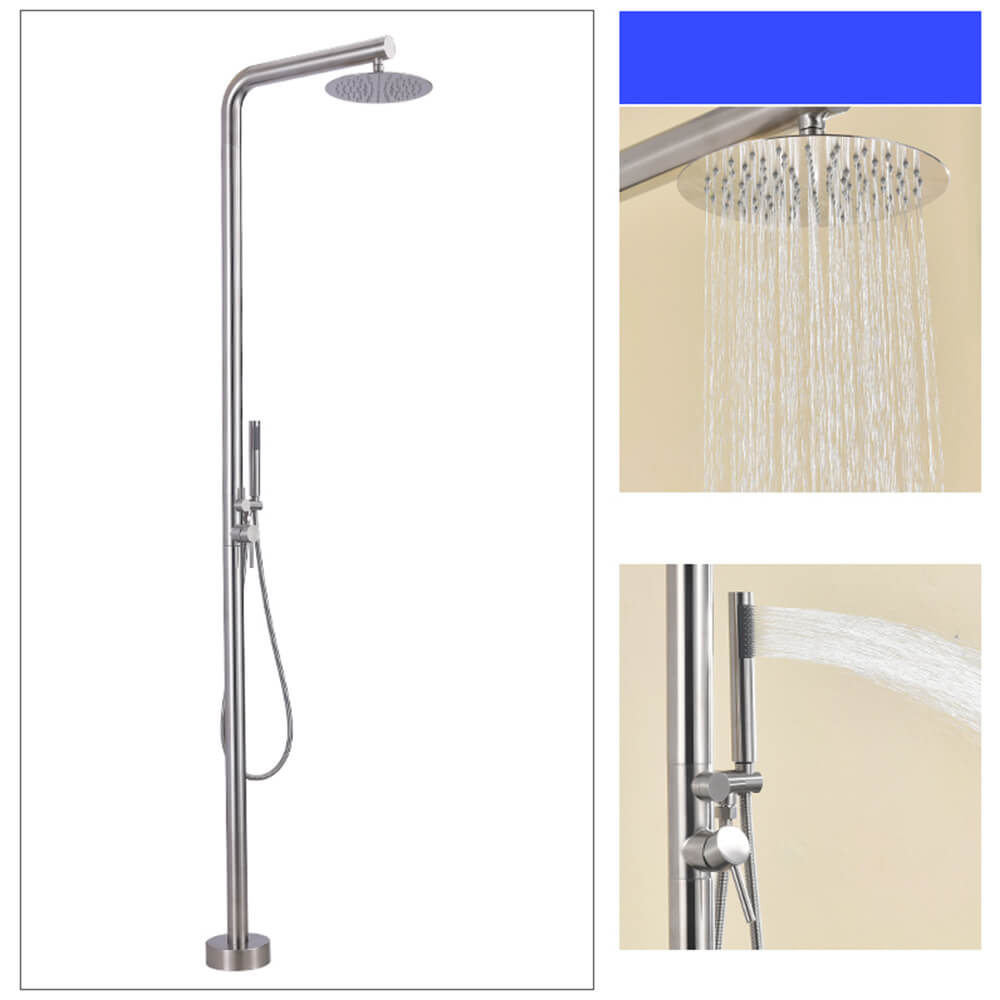
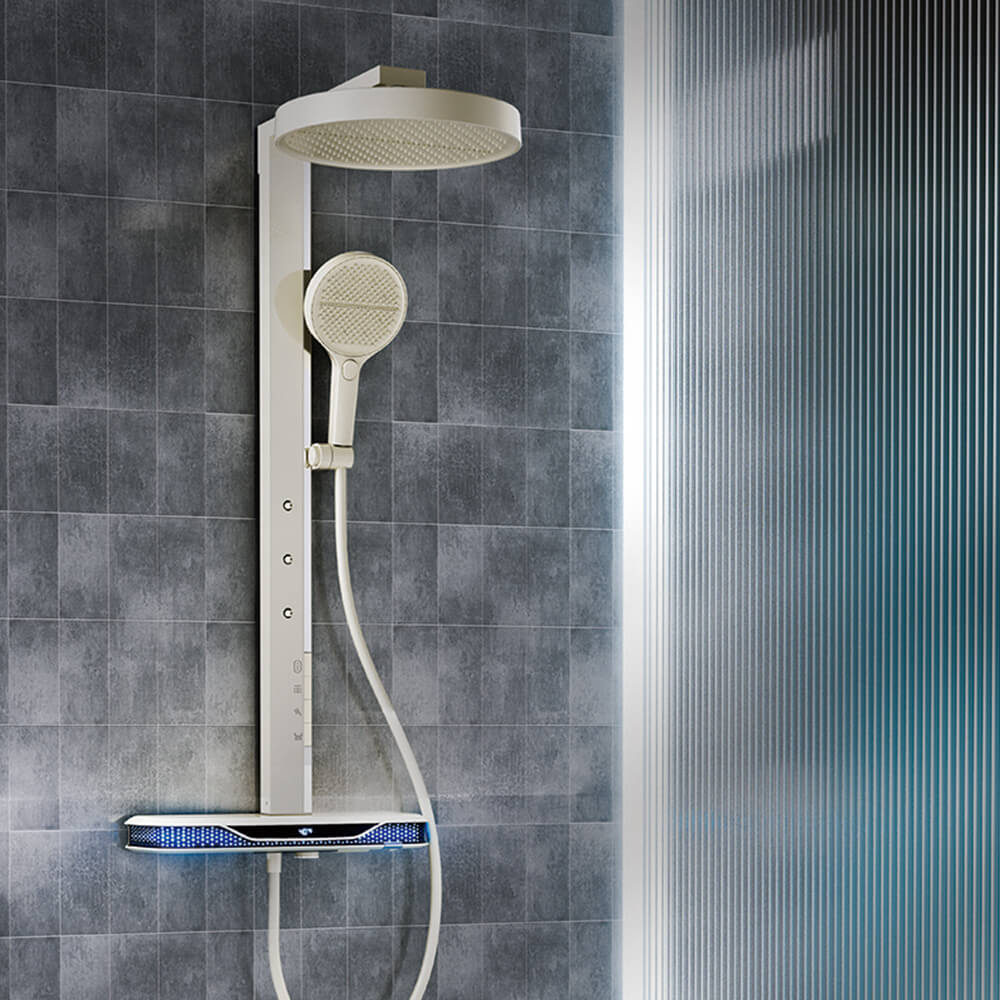
- Rain head + handheld dual function: wide overhead rinse plus a detachable sprayer for feet, pets, and gear
- Thermostatic or pressure-balance mixing valve: consistent temperature when running hot-cold lines
- Silicone nozzles: resist hard-water mineral buildup and stay clog-free with minimal care
- Weighted or stakeable base: essential for wind stability on a 7-foot column
- Drain valve: full water release for winterizing and off-season storage
4. Materials That Survive Outside
Outdoor conditions are harsh — sun, rain, chlorine, salt air, and freezing winters. Here is what actually lasts:
304 / 316 Stainless Steel
The gold standard for outdoor shower fixtures. 304 resists rust in most climates; 316 marine-grade is essential for coastal homes within reach of salt spray. No plating to peel — the material itself is the finish.
Solid Brass with PVD Coating
Extremely durable with a premium weight and feel. PVD (Physical Vapor Deposition) coating prevents tarnishing even in salty air and resists UV fading. Choose PVD over standard electroplating — cheap plating peels within one season outdoors.
What to Avoid
Zinc alloy and plain chrome fixtures flake and corrode quickly under rain and UV exposure. If you see "zinc" or "chrome-plated" on a budget freestanding unit, expect a short lifespan.
5. Design Trends Worth Noting in 2026
- Minimalist columns dominate — clean vertical lines that double as landscape sculpture
- Matte black and gunmetal grey finishes pair beautifully with natural stone and wood decking
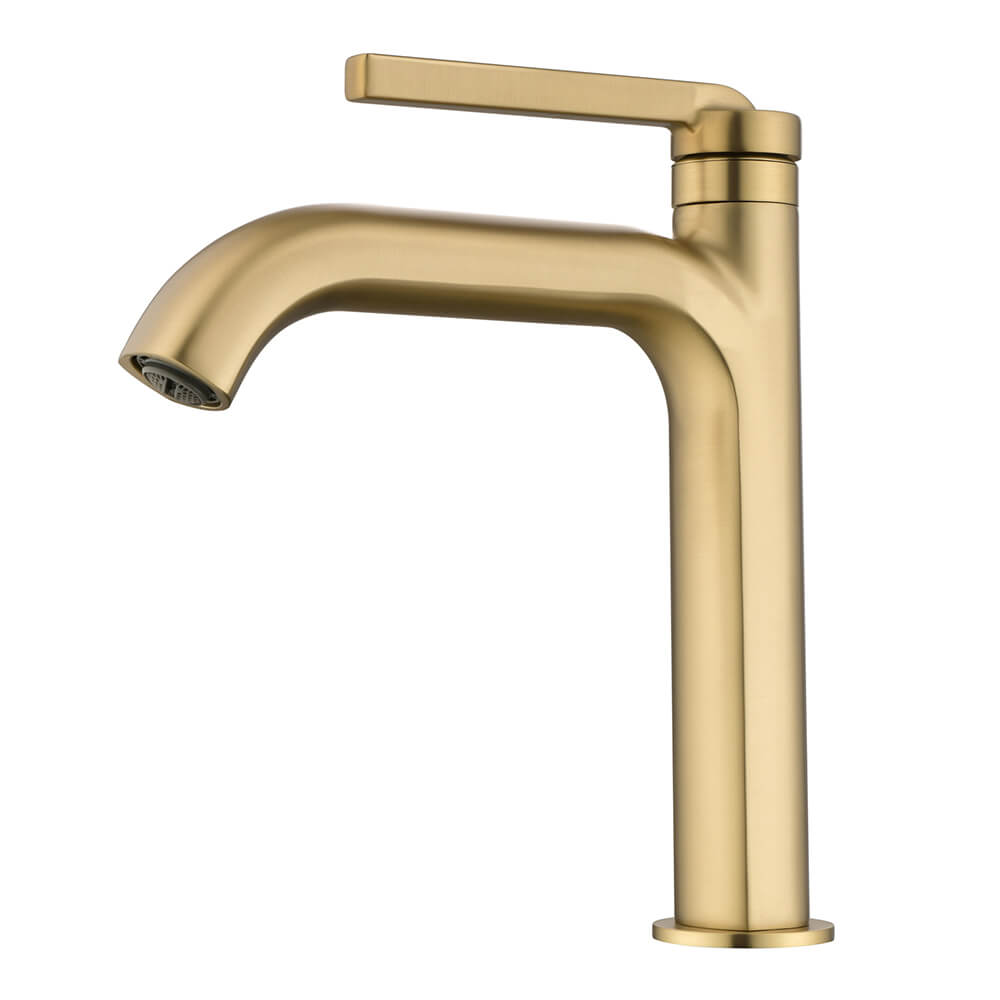
- Brushed gold and brushed stainless suit modern and transitional landscapes alike
- Natural material accents — stone bases, bamboo screens, and cedar privacy panels blend the shower into the garden
- Integrated storage — shelves or hooks for towels and swim gear on premium models
6. Installation Essentials
Basic (Hose-Fed) Setup
Most freestanding units connect to a standard garden hose for a DIY install. Mount the base on a stable pad — concrete pavers or a small poured pad — then connect the water. Full install in under an hour.
Permanent Hot-Cold Setup
- Run hot and cold supply lines (PEX is affordable and freeze-resistant) to the column location.
- Install frost-proof shut-off valves and a drain-down point in cold climates.
- Slope the base toward a gravel bed or French drain to prevent water pooling.
- Anchor the column to a concrete footing or heavy-duty deck mount — wind loading is real.
- Pressure-test all connections before finishing the base.
Placement Tips
- Position the shower between the pool and the house exit for maximum convenience
- Place on permeable ground (gravel, pavers) so water soaks away naturally
- Add a privacy screen or tall plantings for comfort without blocking sun
7. Winterizing (Cold Climates)
- Drain all water from the column, hoses, and mixing valve before first frost
- Blow out supply lines with compressed air for plumbed setups
- Cover or store the unit indoors if it is portable
- Frozen water is the leading cause of cracked valves and split fittings — winterizing is not optional
8. What You'll Spend in 2026
| Type |
Price Range |
What You Get |
| Hose-fed stainless column, single spray |
$250 – $450 |
Basic rain head, 304 stainless, weighted base |
| Dual-function (rain + handheld) |
$400 – $700 |
Two spray modes, better valve, premium finish |
| Hot-cold thermostatic system |
$600 – $1,200 |
Mixing valve, full brass internals, PVD finish |
| 316 marine-grade coastal unit |
$800 – $1,800 |
Maximum salt-air resistance, premium construction |
Add $200 – $800 for professional plumbing and base work if you choose a permanent hot-cold installation.
The Bottom Line
A freestanding outdoor shower is one of those rare upgrades that improves comfort, protects your home, and adds genuine visual appeal all at once. Choose 304 (or 316 for coastal) stainless or PVD-coated brass, confirm the base is anchored and drainage is handled, and winterize before first frost — then enjoy a private rinse station for a decade or more.
Browse Jinnaiya's selection of outdoor shower heads and complete freestanding kits to turn your backyard into a private retreat this season.