Solar outdoor showers are the fastest-growing category in backyard design in 2026 — and for good reason. They deliver warm water with zero electricity, zero gas, and zero utility bills, while turning your pool deck or garden into a self-sustaining rinse station.
But not all solar showers are created equal. Tank capacity, material quality, water temperature performance, and placement all determine whether you get a reliable daily rinse or a lukewarm disappointment on cloudy days.
This complete buying guide breaks down everything you need to know: how solar showers work, what they cost vs. what they save, which materials last, how to install them, and how to keep them performing season after season.

1. How Solar Outdoor Showers Work
A solar shower uses a dark-colored water tank mounted above the shower head. Sunlight heats the tank directly, creating natural thermosiphoning: warm water rises, cold water sinks, and the shower delivers the heated water by gravity — no pump, no wiring, no fuel required.
The Three Core Components
- The water tank: Typically 3–10 gallons, made of UV-resistant HDPE resin or stainless steel. Darker tanks absorb more heat.
- The shower head: Gravity-fed heads with adjustable spray patterns deliver a satisfying rinse without mains pressure.
- The valve system: A simple on/off valve plus a drain valve for winterizing. Premium models add thermostatic blending with a cold-water bypass for temperature control.
The beauty of the system is its simplicity. No installation of hot water lines, no electrical work, no permits for most setups. If you can attach it to a wall or a freestanding post and connect a garden hose, you have a working solar shower.
2. How Much Hot Water Do You Actually Get?
Temperature performance depends on three factors: tank size, sun exposure, and climate.
| Conditions | Tank Size | Water Temperature | Best Use |
|---|
| Full sun, 6+ hours, summer | 5–7 gallons | 90–110°F (32–43°C) | Comfortable warm shower |
| Partial sun, 4 hours, shoulder season | 7–10 gallons | 75–90°F (24–32°C) | Refreshing rinse |
| Overcast or cool day | Any | Ambient or cool | Cold rinse / cool-down |
Most manufacturers rate their tanks for a
single comfortable shower per sunny cycle. If your household has multiple users, consider either a larger tank or a dual-tank setup. Remember: solar showers are designed as rinse stations, not replacements for your indoor shower.

3. Cost: What You Pay vs. What You Save
The upfront cost of a solar outdoor shower is modest, and the operating cost is essentially zero.
| Type | Price Range | Operating Cost |
|---|
| Basic bag-style solar shower | $20 – $60 | $0 |
| Wall-mounted solar shower (5–7 gal) | $100 – $250 | $0 |
| Freestanding solar column (7–10 gal) | $250 – $600 | $0 |
| Premium dual-tank / smart models | $600 – $1,200 | $0 |
Compare that to a traditional hot-cold plumbed outdoor shower, where professional installation of supply lines typically runs
$500 – $2,000, plus ongoing water heating costs. A solar shower typically pays for itself within the first season — and then saves money every summer after.
4. Materials That Survive the Outdoors
Because solar showers sit in direct sun all day, every day, material quality matters more than in any other outdoor fixture.
What to Look For
- HDPE resin tanks: Resist algae growth, maintain water temperature well, and won't corrode. The industry standard for solar storage.
- Stainless steel hardware: 304 grade for the frame, shower head, and fittings — rust-proof and UV-stable.
- UV-resistant everything: Plastics and finishes must withstand years of direct sun without cracking, fading, or becoming brittle.
- Brass or stainless fittings: Leak-free connections that survive freeze-thaw cycles when properly winterized.
- Quality PVD-coated finishes: If you choose matte black, brushed gold, or other colored finishes, PVD coating prevents peeling and fading.
Avoid: cheap ABS plastic tanks on budget models — they degrade under UV within 2–3 seasons, and thin electroplated finishes peel quickly in sun and rain.

5. Design Trends for 2026 Backyards
Solar showers are no longer purely functional — they're design features.
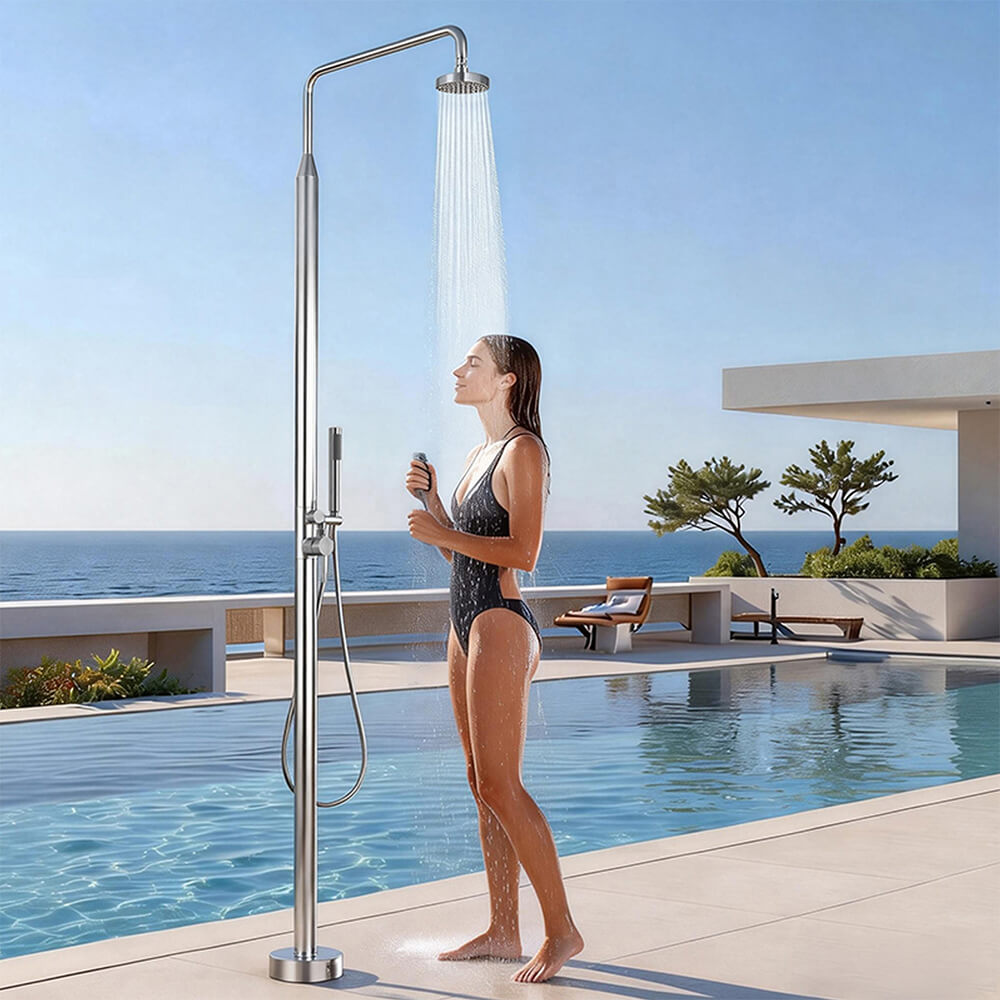
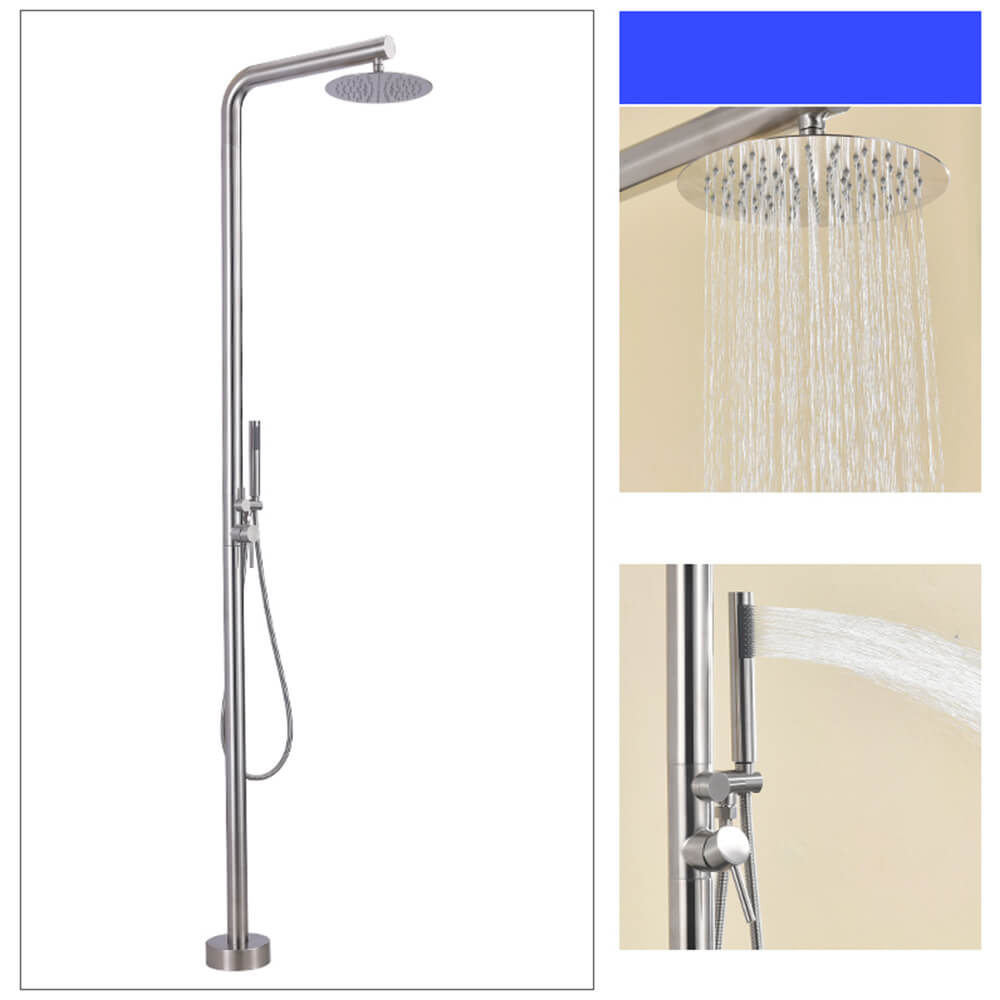
- Freestanding minimalist columns: Sleek, self-contained units that anchor a pool deck or garden corner without touching the house.
- Natural material pairing: Stone bases, bamboo accents, and cedar privacy screens blend the shower into the landscape.
- Wall-mounted space savers: Perfect for small patios and urban yards where floor space is precious.
- Color-integrated finishes: White and cream tanks dominate for heat efficiency, while matte black and brushed gold columns add a premium architectural statement.
- Privacy screens: Integrated or companion fencing solutions that hide the unit when not in use and create an enclosed spa zone.
6. Placement & Installation Tips
Where you put your solar shower determines how well it performs.
- Maximum sun: Choose a location with at least 6 hours of direct sunlight daily — typically the south-facing side of your property in the Northern Hemisphere.
- Drainage first: Install over a permeable surface (gravel bed, decking gaps) or route to a French drain. Standing water attracts mosquitoes and creates slip hazards.
- Privacy without shade: Hedges and fences should screen the shower without blocking the sun on the tank.
- Water source access: Keep a garden hose connection within reach for filling the tank.
- Secure the base: Freestanding columns need a concrete pad or heavy-duty deck mount — wind loading on a 7-foot column is real.
Most wall-mounted and freestanding solar showers are DIY-installable in an afternoon. No plumber required for the basic setups.
7. Maintenance & Winter Care
Year-Round Routine
- Drain the tank completely after each use in off-season periods to prevent stagnation and algae growth.
- Wipe the tank and shower head with a microfiber cloth to remove mineral deposits.
- Clean silicone nozzles (if equipped) — they resist hard-water buildup far better than metal.
Winterization (Freezing Climates)
- Drain all water from the tank, hoses, and valve before first frost.
- Remove and store the unit indoors if it's a portable or wall-mounted model that detaches.
- For permanent freestanding units, cap the supply line and verify the tank is bone-dry.
- Failure to winterize is the leading cause of cracked tanks and split fittings — HDPE expands when frozen water crystallizes inside it.
8. Solar vs. Traditional Outdoor Shower: Quick Verdict
| Factor | Solar Shower | Plumbed Outdoor Shower |
|---|
| Upfront cost | $100 – $600 | $300 – $3,000+ installed |
| Operating cost | $0 | Water heating bills |
| Installation | DIY, no permits | May require plumber / permits |
| Water temperature | Sun-dependent | Always hot on demand |
| Environmental impact | Zero energy | Gas/electric heating |
| Best for | Warm-season rinsing, eco-conscious homes | Year-round use, cold climates |
Final Takeaway
If you want a warm rinse after swimming, gardening, or playing with the dog — without adding a cent to your utility bill — a solar outdoor shower is the smartest backyard upgrade of 2026.
Choose a model with an HDPE tank of 5 gallons or more, 304 stainless hardware, and UV-resistant construction. Place it in full sun over proper drainage. Winterize it before the first frost. Do those four things and your solar shower will deliver thousands of free, refreshing rinses for a decade or more.
Browse Jinnaiya's selection of premium solar outdoor showers to find the right size and style for your backyard.