The Case for an Outdoor Shower in 2026
Not every backyard has a pool. Not every home sits near a beach. But almost every household with a dog, a garden, or a hot summer yard has felt the same thing: you need a place to rinse off before going back inside. Muddy paws. Sandy feet. Garden soil on your hands. Post-workout sweat. An outdoor shower solves all of it - without dragging dirt through your house.
The concept is simple: a water fixture installed outside, connected to your existing hot and cold supply lines (or just a garden hose for basic setups), giving you a dedicated rinse station at your back door. No hose-bib awkwardness. No dragging a bathing suit through the kitchen. Just step outside, wash off, and go back in clean.
That basic convenience is why outdoor showers are appearing in backyards, patios, pool decks, and even rooftop terraces across North America in 2026. The outdoor living boom, accelerated by years of increased time spent at home, has turned what used to be a beach-house luxury into a practical home upgrade that appeals to a wide range of homeowners and renters alike.
Where Outdoor Shower Installations Are Growing Fastest
Houzz's 2025 Outdoor Living Trends survey found that 42% of homeowners who undertook backyard renovation projects included some form of outdoor water feature - a category that encompasses outdoor showers, hand-wash stations, and poolside rinse fixtures. The NAHB (National Association of Home Builders) has noted that outdoor shower installations have become one of the most requested features in new single-family home construction, particularly in climate zones with extended warm seasons.
The geography is shifting. While coastal markets (Florida, the Carolinas, Southern California) remain the core demand base, suburban homeowners in Phoenix, Dallas, and Atlanta are now driving the fastest year-over-year growth, according to keyword trend data from home improvement platforms. Pool owners need somewhere to rinse before coming inside. Dog owners want a dedicated wash-down station. Gardeners want to hose off soil without tracking it through the house. All of these are valid, everyday use cases that have nothing to do with the beach.
What You Are Actually Getting: Features That Perform
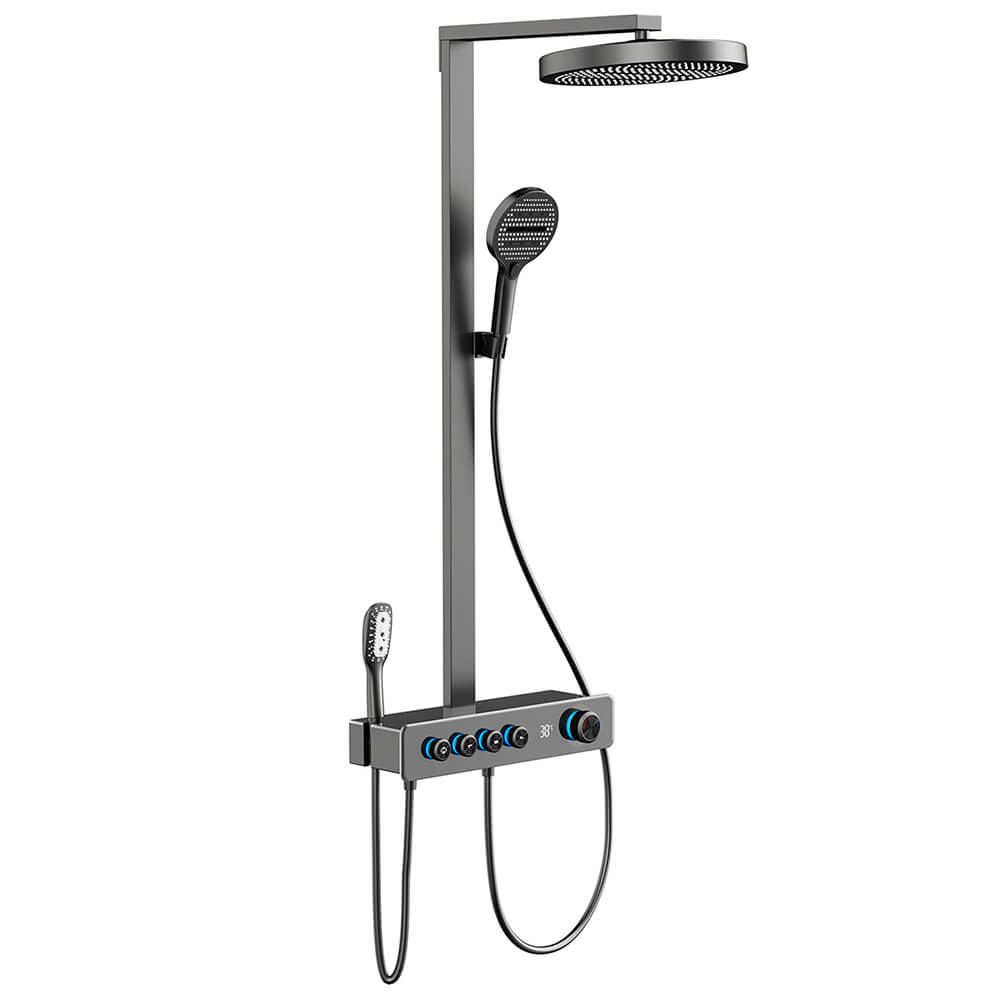
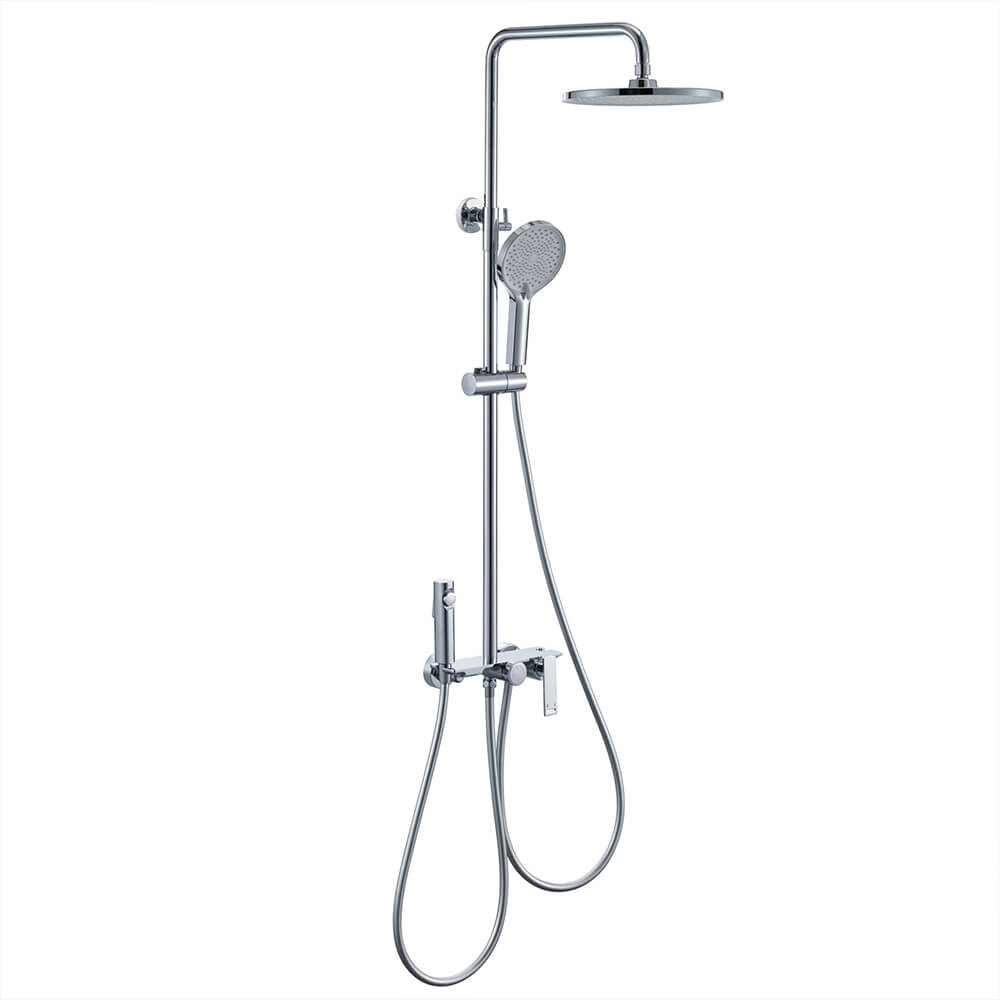
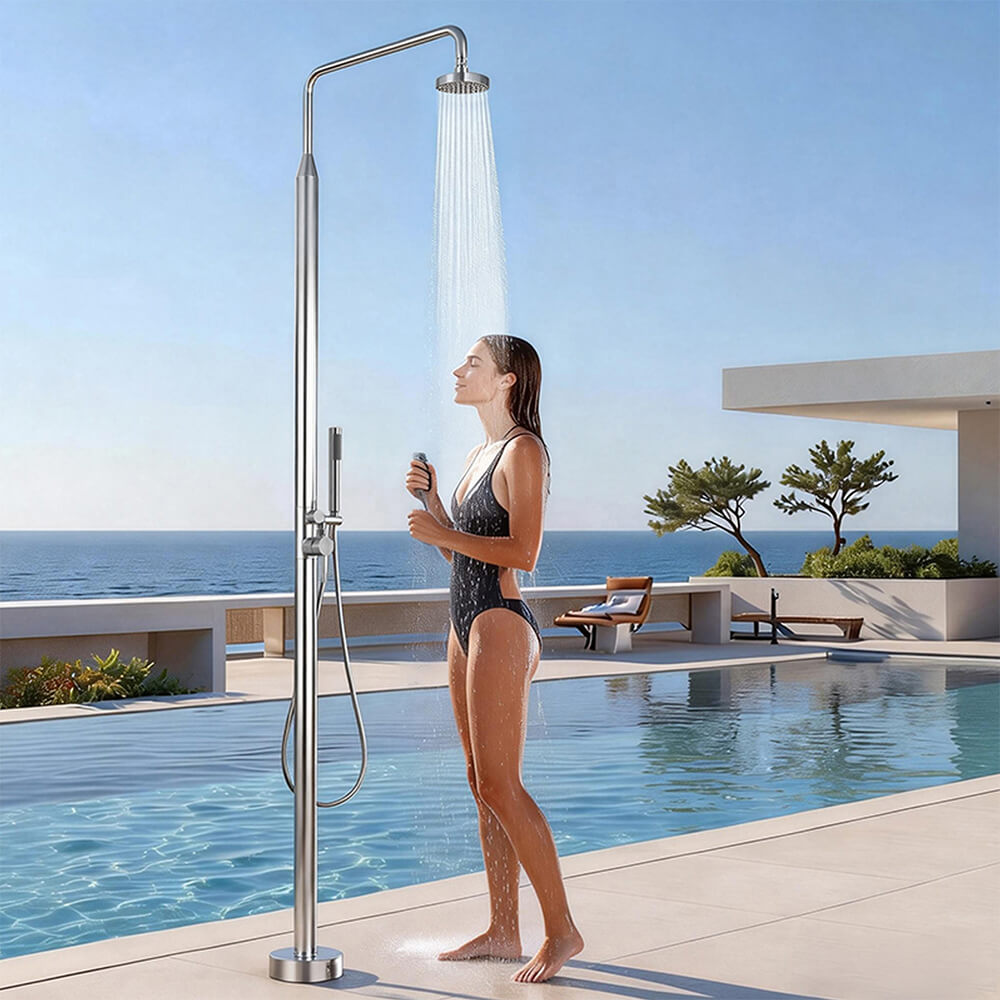
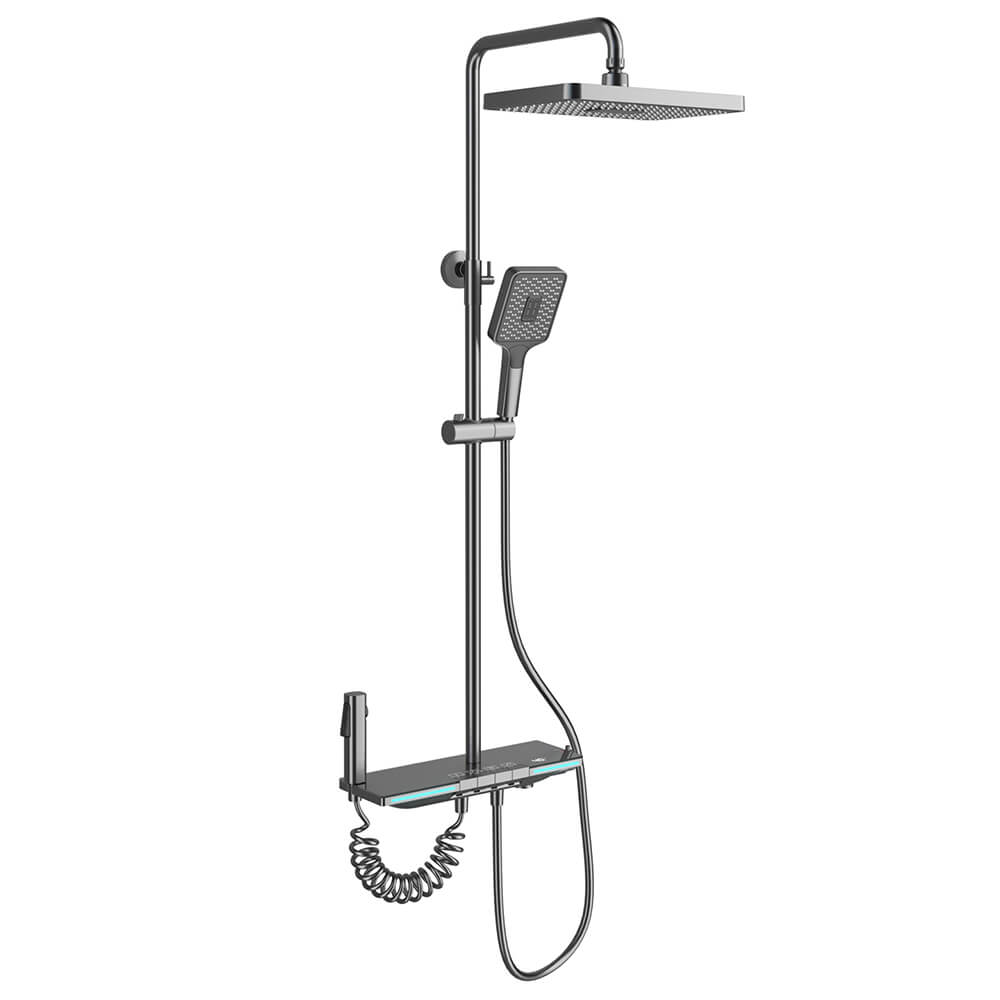
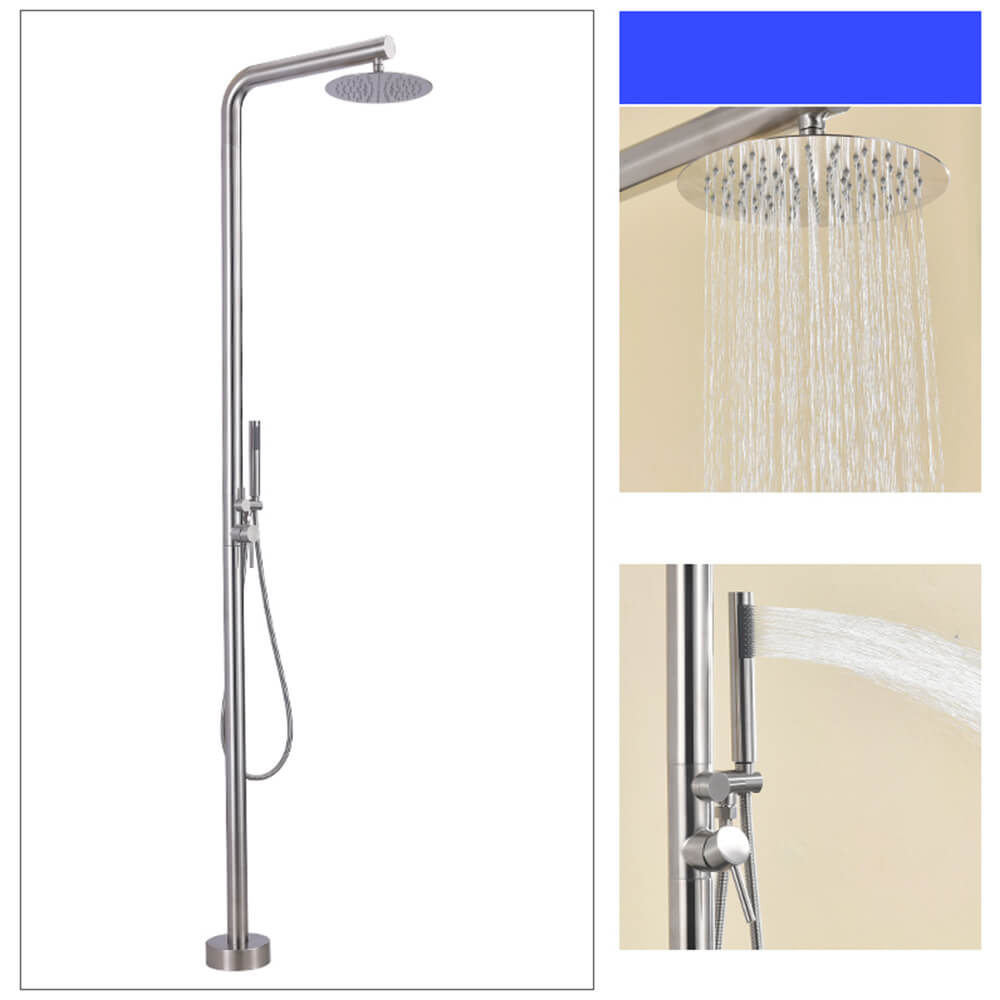
Outdoor showers range from a simple wall-mounted head on a garden hose to a full stainless steel freestanding column with hot-cold mixing and handheld spray. Here is how to think about what you actually need.
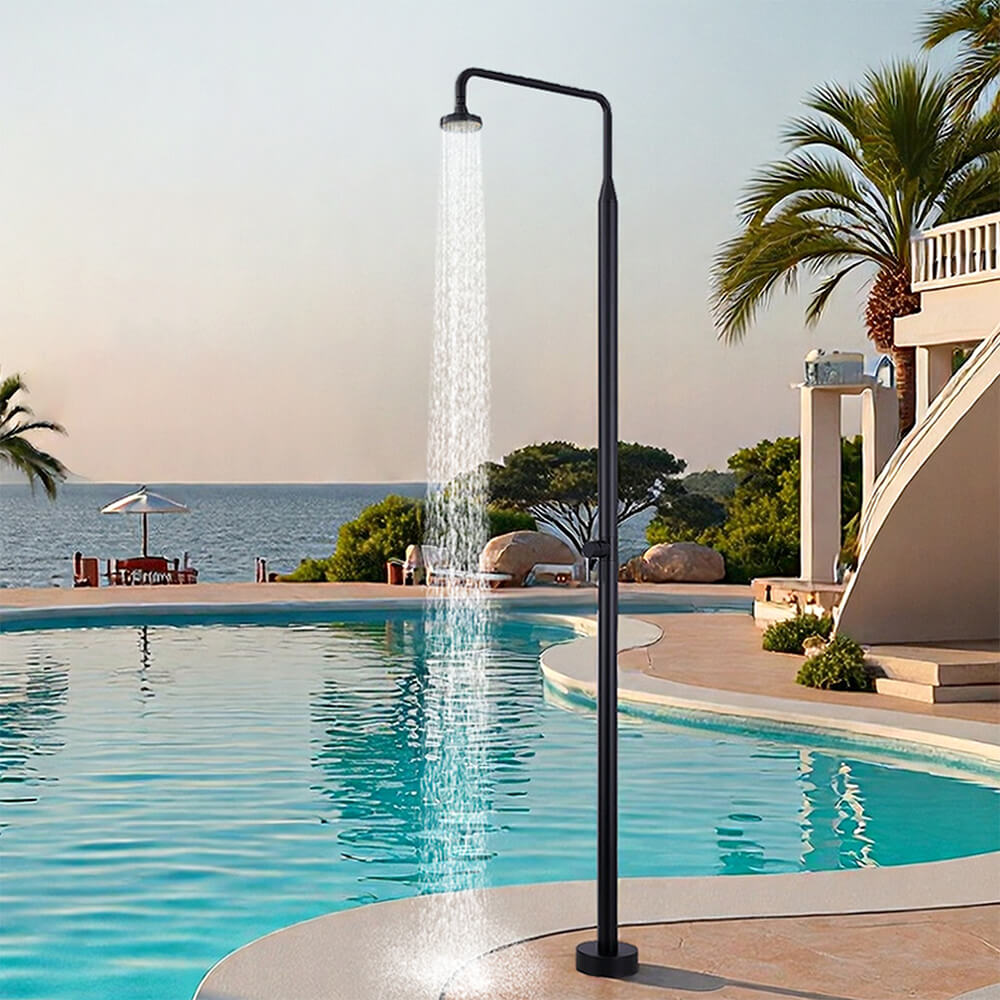
Wall-mounted vs. freestanding. If you have an exterior wall near a water line, a wall-mounted unit takes an afternoon to install and costs relatively little. Freestanding columns stand independently and work better if you want the shower positioned away from the house - say, by a pool or in the corner of a larger yard. The trade-off is that freestanding units need a stable base (concrete pad or deck) and proper drainage underneath.
Single cold vs. hot-cold mixing. A single-cold setup (garden hose connected directly) is the cheapest and simplest entry point. It works perfectly well for warm-weather rinsing. Add a hot-cold mixing valve and you extend usability into cooler shoulder seasons, but you need hot water supply lines run to the unit - which adds plumbing cost and complexity.
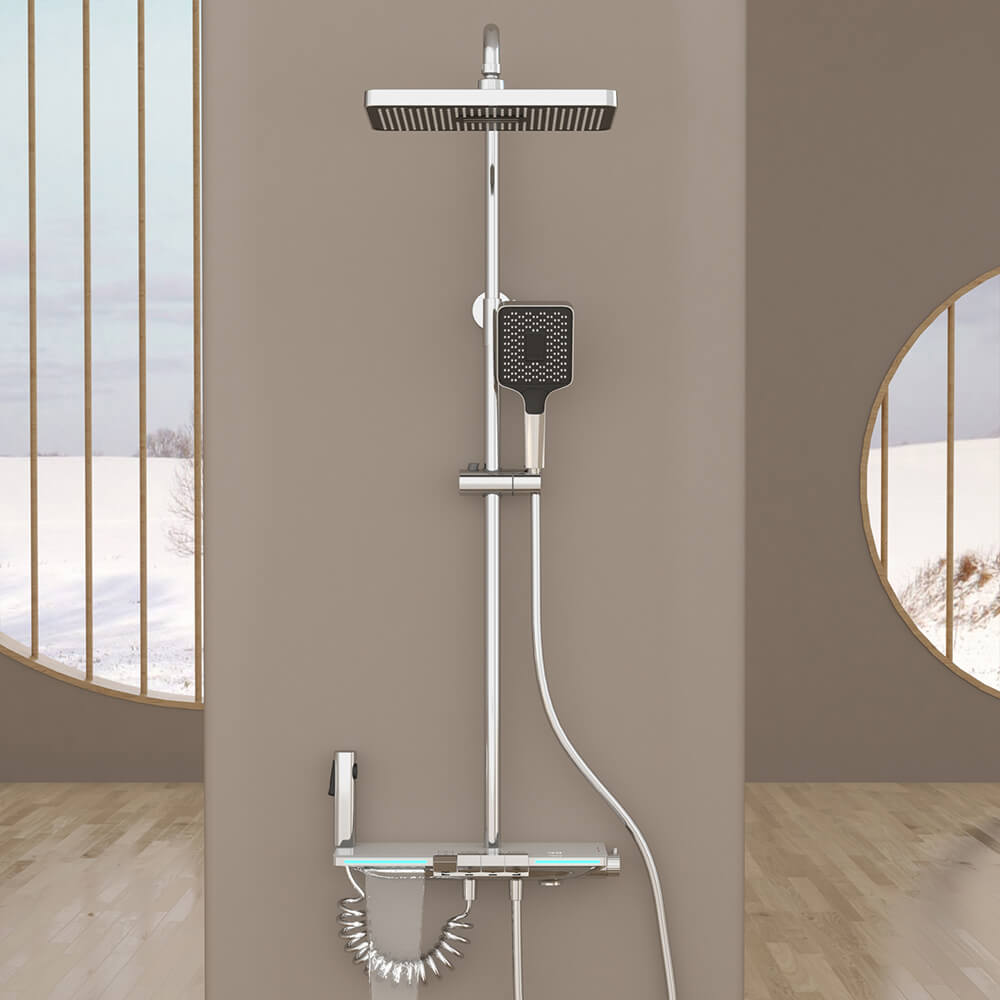
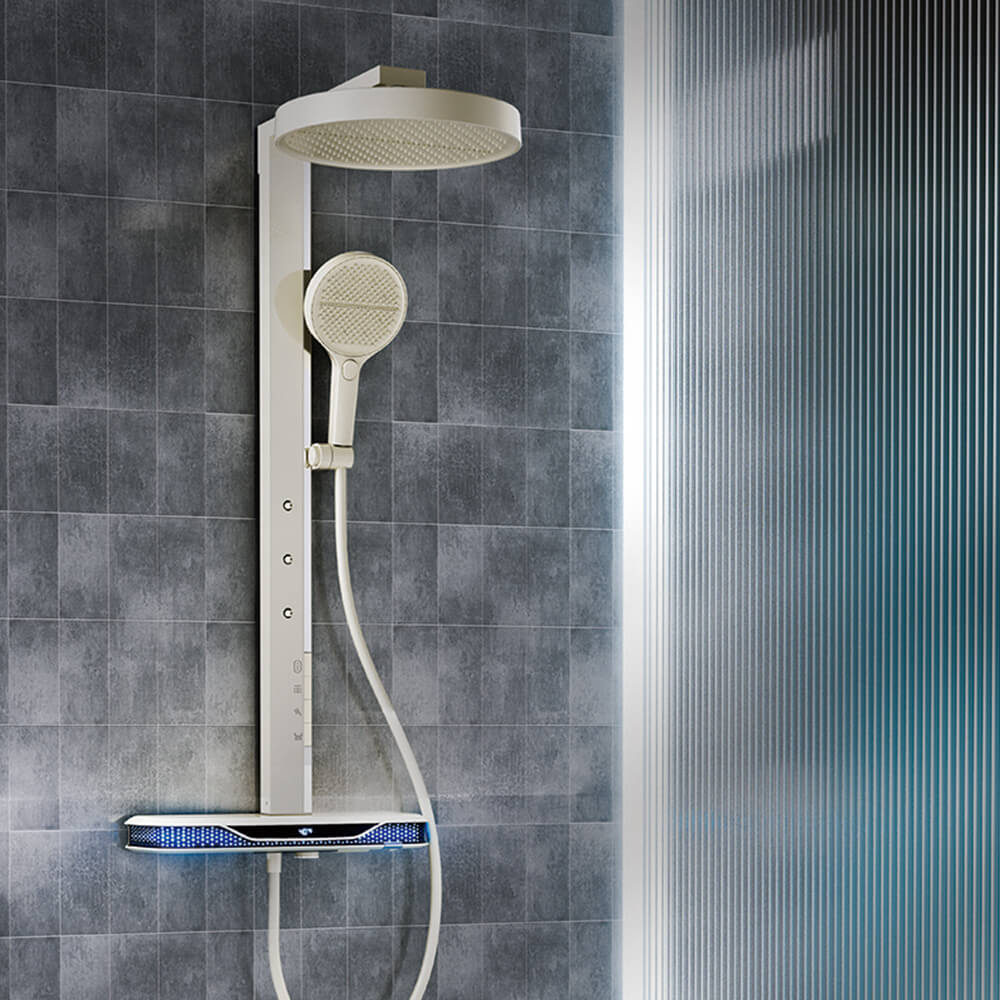
Fixed head vs. dual-function (rain plus handheld). A fixed rainfall-style head gives you a wide, even rinse. A dual-function system adds a detachable handheld sprayer, which is genuinely more versatile: rinse your hair under the rain head, then use the handheld to wash feet, pets, or gear. The price difference between single and dual-function units is modest.
Material: what holds up outdoors. For anything permanent, 304 stainless steel is the reliable choice. It handles sun exposure, rain, and (for coastal homes) salt air without rusting. Brass is equally durable and resists corrosion well, but costs more. ABS plastic works for portable or seasonal setups but degrades under UV and freezing temperatures. If you choose an electroplated finish (matte black, gunmetal, brushed gold, white), make sure the plating is high-quality PVD coating - cheap plating peels within one season.
Silicone nozzles are worth prioritizing on any unit: they resist mineral buildup from hard water and wipe clean in seconds, unlike metal nozzles which require regular descaling.
Who Is This Actually For?
One common misconception: you need a big property or a pool to justify an outdoor shower. The reality is more interesting.
Homeowners with dogs wash them outside after every walk or swim - no indoor bathing, no wet dog smell in the bathroom. Urban residents with small paved backyards or rooftop terraces mount a compact wall unit and use it for post-gardening cleanup, post-workout rinses, or cooling off on hot days without filling a bathtub. Pool and beach households use it as the universal pre-indoor transition zone. Renters can use portable camping-style outdoor shower units that hang from a hook and require no plumbing installation - temporary, effective, removable when you move.
The common thread is not property type or geography. It is the desire to keep outdoor mess (soil, sand, chlorine, fur, sweat) from crossing the threshold into your living space.
Installation: What Actually Matters
Most DIY-friendly outdoor shower kits are designed for straightforward installation. But there are three details that separate a setup that lasts from one that causes problems later.
Drainage is the most overlooked part. Water has to go somewhere. Without a plan, it pools on your deck, creates a slip hazard, and attracts mosquitoes within days. A simple gravel drainage bed (a shallow pit filled with coarse gravel) or a French drain extension handles this with minimal effort. Do this before you set the unit, not after.
Know your plumbing situation before you buy. A cold-only wall-mounted unit needs nothing more than a threaded garden hose connection on an exterior wall. Hot-cold mixing requires two supply lines (hot and cold) run to the location - that means opening a wall, running PEX or copper pipe, and possibly hiring a plumber. Budget accordingly. PEX is the most common choice for outdoor plumbing because it is affordable, flexible, and freeze-resistant.
Winterization in cold climates. If temperatures drop below freezing in your area, you need a plan. Single-cold setups with a drain-down valve can be shut off and emptied for winter. Hot-cold systems need a more thorough blow-out of the lines with compressed air. Failure to winterize is the leading cause of cracked pipes and failed mixing valves in the off-season.
Anchoring for freestanding units. A freestanding column might look stable on its own, but wind loading is real. Secure it to a concrete footing or a heavy-duty deck mount following the manufacturer is specifications. A gust of wind tipping a 7-foot stainless column is not a minor incident.
What You Will Actually Pay in 2026
Prices have stabilized after several years of volatility in the home improvement sector. Here is a rough picture of what is available at different price points:
Basic ABS plastic wall-mounted units (garden-hose compatible) start under 100 dollars. Functional for warm-weather seasonal use. Not suitable for cold climates or permanent installation.
Stainless steel wall-mounted heads and basic freestanding kits typically range from 100 to 300 dollars. This is where the best value sits for most homeowners. Look for units with 304 stainless heads and brass fittings at this price range.
Dual-function (rain plus handheld) freestanding columns in 304 stainless steel fall in the 300 to 600 dollar range. Most units at this price include a mixing valve and come ready for hot-cold plumbing.
Above 600 dollars, you find 316 stainless steel units with premium PVD finishes, designed for coastal environments or homeowners who want the highest durability and finish quality.
The installed cost (including plumbing if needed) for a mid-range wall-mounted unit with basic plumbing typically runs 300 to 800 dollars total. A full freestanding hot-cold installation with professional plumbing can reach 1,500 to 3,000 dollars depending on distance from the house and local labor rates.
The Bottom Line
An outdoor shower is not a luxury item in the traditional sense - it is a problem-solving fixture. If you have ever dealt with sand in the hallway, muddy paw prints on the kitchen floor, or the hassle of hosing down a dog in a bathroom tub, you already understand the use case. The question is not whether the benefit is real. It is whether the installation complexity and cost make sense for your situation.
For a simple wall-mounted cold-only unit with a garden hose connection, the answer is almost always yes - the cost is low, the installation is easy, and the daily return is immediate. For a full hot-cold freestanding column with professional plumbing, it makes sense if you are already investing in your backyard space or you live somewhere with a long warm season where you will use it year after year.
Whatever your situation, Jinnaiya carries a range of outdoor shower units to match different property types, budgets, and installation setups. Browse the full collection to see what fits your space.